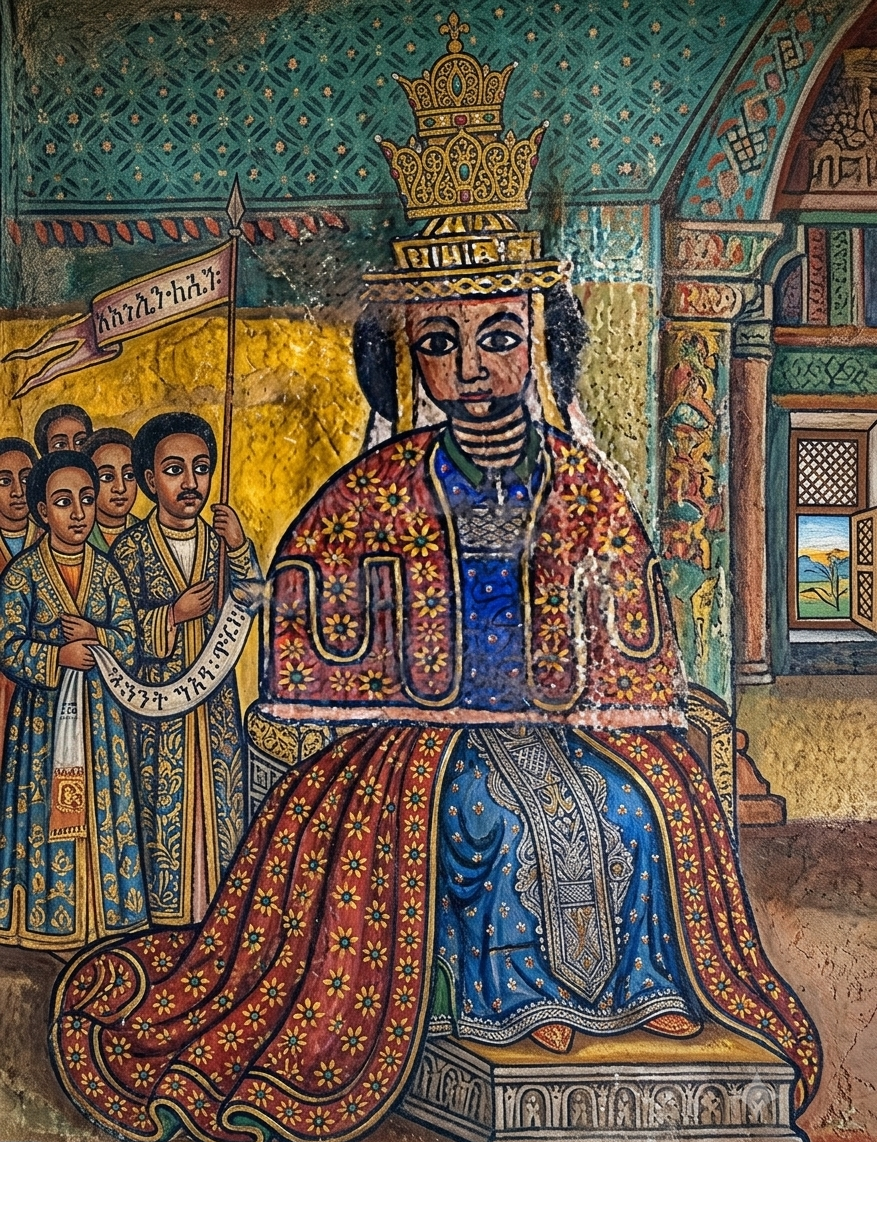

The Appointed Day of Christ’s Judgment: Mercy for the Elect, Justice for the Reprobate, and the Assurance of the Resurrection
The Areopagus was the ancient court of Athens, the hill where the city’s highest tribunal had heard its gravest cases for centuries. The Apostle Paul stood there before the Epicurean and Stoic philosophers and proclaimed a seat above it (Acts 17:18-19). The two schools listening had each ruled out such a court. The Stoics traced everything to an impersonal fate, the Epicureans to the chance collision of atoms, and both concluded that final truth lies beyond reach, so a sensible man tends to the present and lets the rest go. Paul told them that God “has fixed a day on which he will judge the world in righteousness by a man whom he has appointed, and of this he has given assurance to all by raising him from the dead” (Acts 17:31). The resurrection is the proof. By raising the appointed man, God has already installed the Judge and guaranteed the day to everyone.
The appointed day
The final chapter of the 1689 London Baptist Confession of Faith The chapter’s first paragraph reads, “God hath appointed a day, wherein he will judge the world in righteousness, by Jesus Christ” (2LBC 32.1). The day is appointed, fixed by God and waiting on nothing that men do. It is also hidden. “Concerning that day and hour no one knows, not even the angels of heaven, nor the Son, but the Father only” (Matthew 24:36). Jesus did give signs, but they are the wrong instrument for setting a date. Wars, famines, earthquakes, false prophets, persecution, and love grown cold (Matthew 24:6-12) have marked every century of the church’s life rather than one. They describe the whole age between Christ’s ascension and return, so they cannot single out its final year. Men in every generation have read them as a countdown and been wrong. From His own signs, Jesus draws a single instruction that His people must stay ready: “Therefore you also must be ready, for the Son of Man is coming at an hour you do not expect” (Matthew 24:44).
Judgment belongs to the Son. “The Father judges no one, but has given all judgment to the Son” (John 5:22), and Jesus Himself said the Father “has given him authority to execute judgment, because he is the Son of Man” (John 5:27). The title reaches back to Daniel, where “one like a son of man” is brought before the Ancient of Days and given “dominion and glory and a kingdom, that all peoples, nations, and languages should serve him” (Daniel 7:13-14). It reaches back further to Eden, where God set a man over creation to govern it, and that man failed. The judgment of the world is handed to the man who did not fail, the last Adam, who alone is fit to hold it. His verdict carries none of the faults of human courts. He judges nothing by appearance and overlooks nothing. He said, “As I hear, I judge, and my judgment is just, because I seek not my own will but the will of him who sent me” (John 5:30).
The judgment seat
The confession calls the place a “tribunal.” Paul calls it the “judgment seat of Christ” (2 Corinthians 5:10). “Judgment seat” translates the Greek bēma, the raised stone platform where a Roman magistrate sat to hand down a verdict. It was a fixture of civic life, and Paul’s readers in Corinth had watched trials at one. Paul himself had been dragged before the bēma in Corinth, the seat of the proconsul Gallio (Acts 18:12). The word is forensic. The last day is a courtroom, and its outcome is a legal verdict. Before this seat, every person gives an account, and the reckoning is exhaustive. It reaches what the hands did and what the mouth said, down to “every careless word” (Matthew 12:36), and past the words to the thoughts behind them, for God “judges the secrets of men by Christ Jesus” (Romans 2:16). Nothing is filed away beyond its reach. Ecclesiastes reminds us, “God will bring every deed into judgment, with every secret thing, whether good or evil” (Ecclesiastes 12:14).
The judgment of the world is handed to the man who did not fail, the last Adam, who alone is fit to hold it. His verdict carries none of the faults of human courts. He judges nothing by appearance and overlooks nothing. Share on XJudged according to works, saved by grace
Each person will “receive what is due for what he has done in the body, whether good or evil” (2 Corinthians 5:10). The standard of the judgment is works. Yet Scripture is equally clear that no one is justified by works of the law (Galatians 2:16). The two statements meet once the place of works in the judgment is understood. Jonathan Edwards states that “Though the righteous are justified by faith, and not by their works, yet they shall be judged according to their works. Then works shall be brought forth as the evidence of their faith. Their faith on that great day shall be tried by its fruits.” Faith is inward and invisible, and the day of judgment brings it into the open, where a tree is known by its fruit. “The good person out of the good treasure of his heart produces good” (Luke 6:45). A believer’s works give the evidence that his faith is alive. They are not the price of his acquittal. That rests on the righteousness of Christ credited to him, so that God is at once “he might be just and the justifier of the one who has faith in Jesus” (Romans 3:26).
The glory of mercy
The confession states that the purpose of the day is “the manifestation of the glory of his mercy, in the eternal salvation of the elect,” and “of his justice, in the eternal damnation of the reprobate” (2LBC 32.2). The day is a public unveiling of both. Mercy is displayed in people who deserve the opposite. The elect were “by nature children of wrath, like the rest of mankind” (Ephesians 2:3); they entered the world under the same condemnation and earned the same sentence. But the law that stood against them was kept, and its penalty paid, by Christ, so that “there is therefore now no condemnation for those who are in Christ Jesus” (Romans 8:1). Paul stages the scene as a courtroom in which the prosecution is invited to speak, and no one comes forward: “Who shall bring any charge against God’s elect? It is God who justifies. Who is to condemn? Christ Jesus is the one who died, more than that, who was raised, who is at the right hand of God, who indeed is interceding for us” (Romans 8:33-34). Romans 8:34 sets the Judge at the right hand of God, pleading for the very people he will judge.
The glory of justice
The same day displays justice. The wicked, “who do not know God, and do not obey the gospel of Jesus Christ, shall be cast aside into everlasting torments, and punished with everlasting destruction, from the presence of the Lord” (2LBC 32.2, quoting 2 Thessalonians 1:8-9). Paul describes them in two ways. They “do not know God,” which is more than ignorance of facts about him, since to know God is to worship and be changed by him, and this they refuse. And they “do not obey the gospel,” declining the command to submit to Christ that the good news carries. The New Testament term rendered “reprobate” is adokimos, the word for metal tested in the fire, found counterfeit, and thrown out (1 Corinthians 9:27; 2 Corinthians 13:5). Their sentence answers the crime. A finite creature who sins against an infinite God commits an offense of infinite weight, and “every transgression or disobedience received a just retribution” (Hebrews 2:2).
Paul’s verb for their punishment in that text, tino, is active; the penalty is one they go on paying. Jesus described the place with the undying worm and the unquenchable fire of Isaiah 66:24, and he changed the prophet’s future tense to the present, so that the worm “does not die” and the fire “is not quenched” (Mark 9:48). His hearers had seen maggots and fire, but never a maggot that would not die or a fire that could not be put out. He also described it as the place of “weeping and gnashing of teeth” (Matthew 8:12; 13:42; 24:51), and so he says, “Depart from me, you cursed, into the eternal fire” (Matthew 25:41).
The sentence ends “away from the presence of the Lord,” and that clause holds the heart of the punishment. Hell is separation from God. The rich man in torment saw Abraham “far off” and begged for a drop of water on his tongue (Luke 16:23-24). Augustine held that the smallest degree of this loss, made eternal, would outweigh every other torment: “to lose the kingdom of God, to be an exile from the city of God, to be a stranger to the life of God… this would be a punishment so great that, given that it is eternal, no torments known to us could be compared with it.” The doctrine also measures the seriousness of sin. Ralph Venning wrote that as God is “holy, all holy, only holy, altogether holy, and always holy, so sin is sinful, all sinful, only sinful, altogether sinful, and always sinful.” It also measures the gospel. In Romans 3 Paul writes that God “put [Christ] forward as a propitiation by his blood” (Romans 3:25). The punishment hell holds forever is the punishment Christ bore at the cross for his people.
This great truth steadies the Christian in suffering, for beside “the eternal weight of glory,” his present affliction is “light” and “momentary” (2 Corinthians 4:17). And it presses the church to preach, since people apart from Christ face what the confession describes, and “how are they to hear without someone preaching?” (Romans 10:14).
The reward of the righteous
The righteous receive the portion set opposite: “everlasting life, and… that fulness of joy and glory with everlasting rewards, in the presence of the Lord” (2LBC 32.2). Their salvation is completed on that day. Paul’s chain runs from God’s eternal choice to its end with no link left out, so that those God justified “he also glorified” (Romans 8:30). The sanctification that began at conversion and was never finished in this life is finished then, and even the body shares in it, raised and transformed to be “like his glorious body” (Philippians 3:21). The rewards are real, and they are measured by faithfulness. To the servant who traded well the master says, “Well done, good and faithful servant… Enter into the joy of your master” (Matthew 25:21), and Paul awaits “the crown of righteousness” from “the righteous judge” on that day (2 Timothy 4:8). Reward and grace do not compete, since the faithfulness that is rewarded was itself the work of grace. The center of it all is “in the presence of the Lord.” Paul weighed a life of fruitful labor against death and preferred the second: “to depart and be with Christ, for that is far better” (Philippians 1:23).
Why the believer longs for the day
The confession’s last paragraph explains why God hid the date. He concealed it so that men “may shake off all carnal security, and be always watchful, because they know not what hour the Lord will come” (2LBC 32.3). If the hour were known, men would simply live life as sinfully as possible until it drew near; but because it is unknown, the whole of life must be lived ready. Death is sure and its hour hidden, and the judgment is the same, so both call for a readiness that never stands down. Jesus taught it with the picture of a thief. “If the master of the house had known in what part of the night the thief was coming, he would have stayed awake” (Matthew 24:43); since no one is given the hour, the whole night is spent watching, “dressed for action” with “lamps burning” (Luke 12:35).
A believer may still feel the fear of that day, aware of his own sins and knowing the account of the fire. What answers the fear is the identity of the Judge. Edwards wrote that “it is for the abundant consolation of the saints, that their own Redeemer is appointed to be their judge.” The one seated on the tribunal is the one who was condemned in their place. The humble souls who in this life were “hated by wicked men… cruelly treated and put to shame” will, on that day, be “openly acquitted, commended, and crowned, before all the world.” The resurrection Paul preached at Athens as God’s assurance of the judgment (Acts 17:31) is the same act that guarantees the believer’s acquittal, since Christ was “raised for our justification” (Romans 4:25). The last words of Revelation are his people’s prayer: “He who testifies to these things says, ‘Surely I am coming soon.’ Amen. Come, Lord Jesus” (Revelation 22:20).



Nick Kennicott is a pastor at Emmanuel Baptist Church in Coconut Creek, Florida. He is the president of Reformed Baptist Seminary and the resident professor of classical studies. He is the founder of the Institute of Pastoral and Theological Training in Egbe, Nigeria. He is a graduate of the Baptist College of Florida and Knox Theological Seminary and is completing his Ph.D. dissertation at Faulkner University. Nick is a co-author of the book In Praise of Old Guys, editor of Keach’s Baptist Catechism in Modern English, and author of Expository Outlines and Observations on Galatians (2027, Mentor/Christian Focus). He is married to Felicia, and they have three children.